
Expense records
What Records Should a Small Business Keep in Canada?
A practical checklist for keeping income, expense, banking, invoice and supporting records organized by Business.
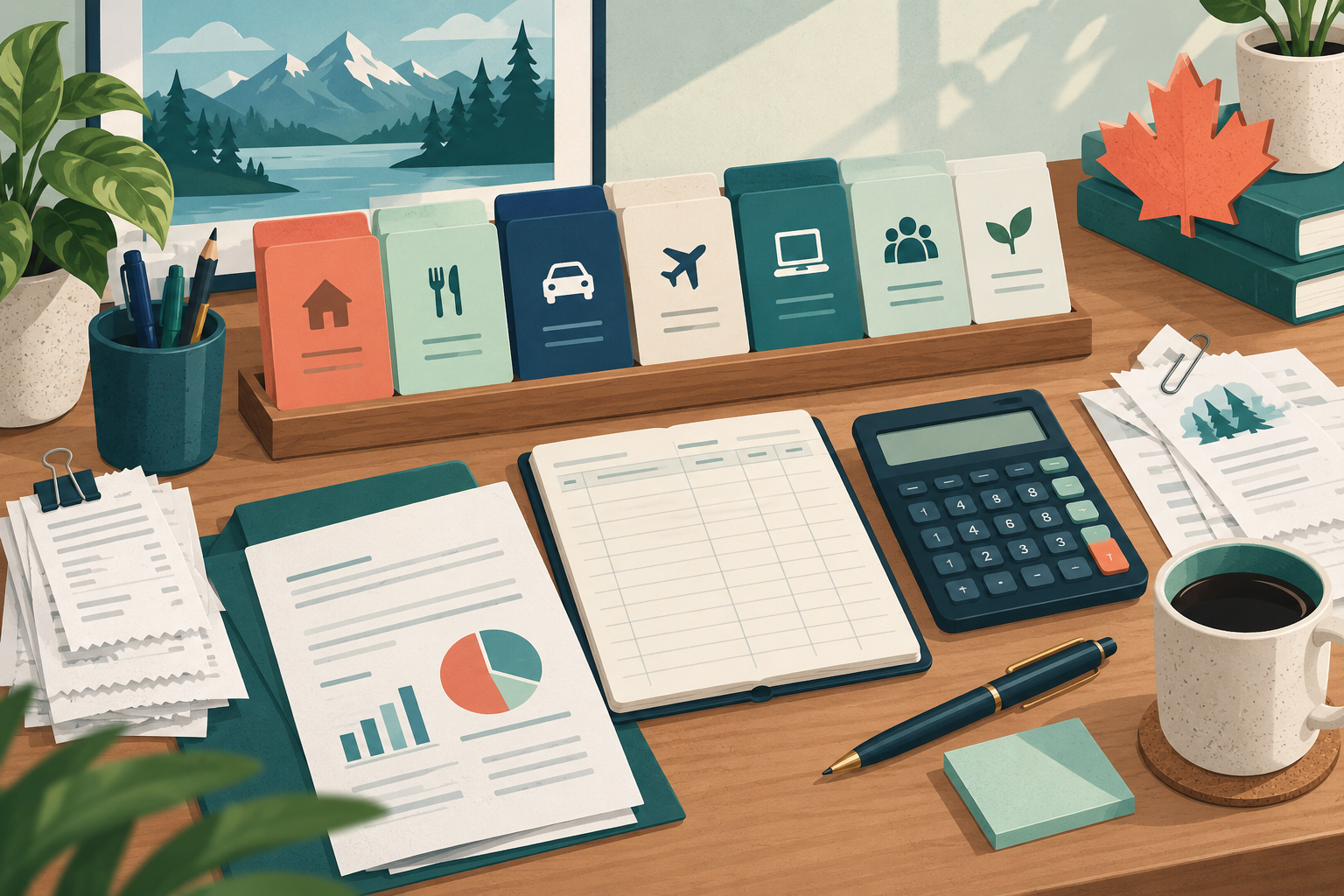
A Canadian small business should keep day-to-day income and expense records plus the documents that support each transaction. The exact set depends on the business, but a complete system normally covers sales, purchases, banking, taxes, assets, vehicles, contracts and changes made to the records.
Keep transaction records and source documents
For income, retain the date, amount and source, along with invoices, sales receipts, deposit records or contracts. For expenses, keep the purchase date, supplier, description, amount, taxes, payment evidence and business purpose.
A bank statement proves movement of money, but it may not explain what was sold or purchased. Connect it to the invoice, receipt or other voucher rather than relying on the statement alone.
Keep records by business area
Your system may include:
- sales and customer invoices;
- purchase receipts and supplier bills;
- bank and credit-card statements;
- payroll and GST/HST records, when applicable;
- vehicle logs and odometer evidence;
- property and asset purchase or sale records;
- contracts, work orders and delivery records;
- owner-paid purchases and repayments; and
- corrections, approvals and review notes.
Keep separate records for each Business. A shared supplier or bank description does not make a transaction belong to more than one Business.
Preserve the audit trail
A reviewer should be able to follow a transaction from its source document to the summarized record. Preserve the original evidence, the recorded values and the reason for later corrections. Avoid deleting and recreating a transaction simply to fix a typo when a traceable correction is available.
Use an operating rhythm
Record transactions close to when they occur. Review missing documents weekly, reconcile accounts monthly and prepare a complete package before year-end. Regular review is more dependable than reconstructing a year from statements at filing time.
SilaTrail’s expense records, monthly review and year-end readiness organize these steps without deciding tax treatment.
Frequently asked questions
How long are business records generally kept?
The CRA generally requires records and supporting documents for six years from the end of the last tax year they relate to. Different periods can apply, so confirm the rule for your situation before destroying anything.
Are electronic records acceptable?
Yes, when they remain complete, accessible and readable. Maintain backups and the ability to export records from third-party systems.
Do I send records with my tax return?
Normally you keep them and make them available if requested rather than sending them with the return.
Official guidance
See the CRA’s business records, recordkeeping responsibilities and retention guidance.
This overview is about organizing records, not determining deductions or filing obligations.