
Receipts and evidence
Are Digital Receipts Acceptable as Business Records in Canada?
Understand how to preserve readable electronic business records and the practical controls that make digital receipts useful.
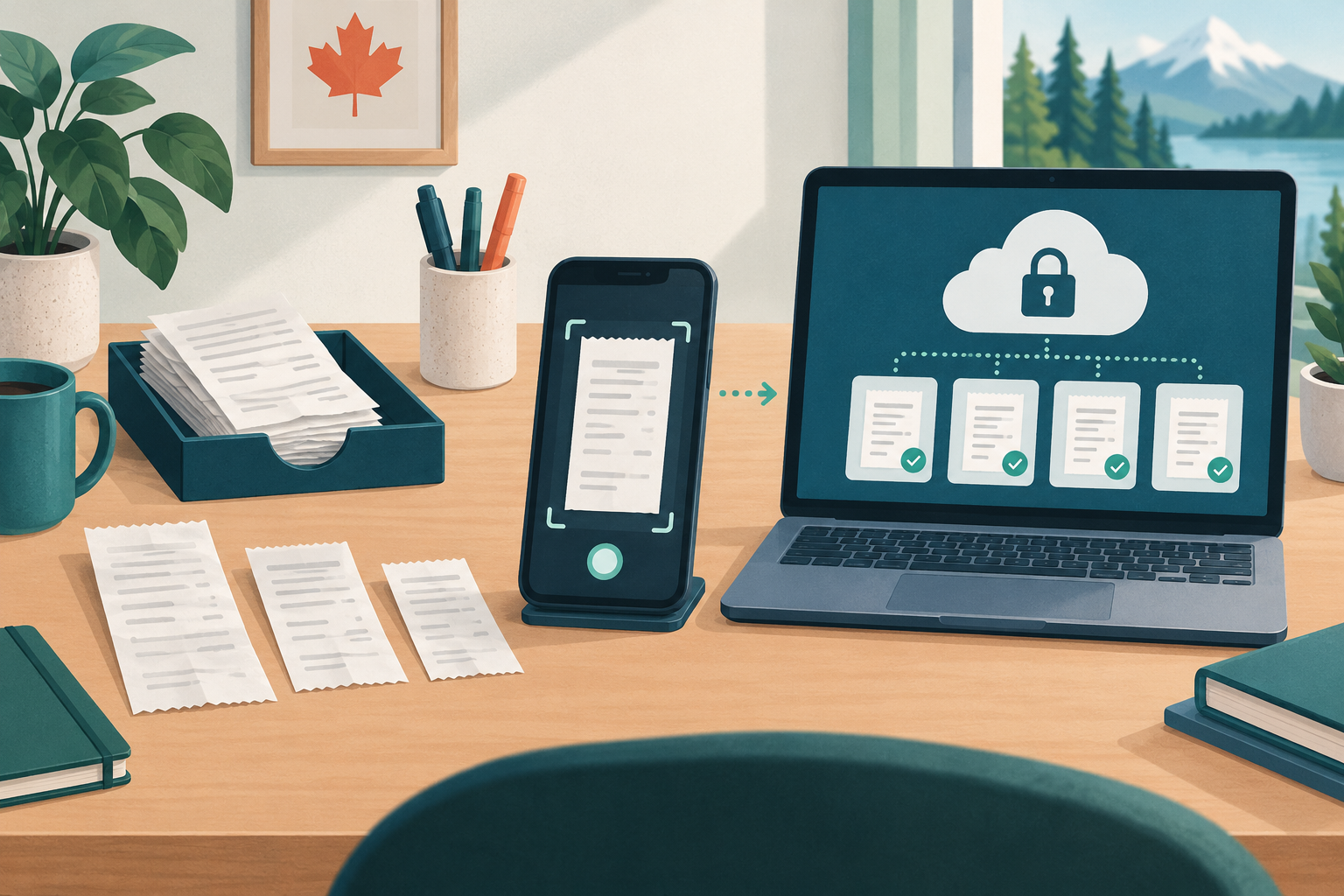
Yes. The Canada Revenue Agency accepts records kept in an accessible and readable electronic format. The important question is not simply whether a receipt is digital; it is whether the electronic record remains complete, usable and available when required.
What “acceptable” means in practice
A digital receipt should preserve the information needed to understand the purchase. Check that it shows, where applicable:
- the supplier;
- transaction date;
- items or services purchased;
- total and taxes;
- currency; and
- payment evidence or related transaction.
A screenshot that removes important context may be less useful than the original PDF or email. Keep the most complete source available.
Born-digital and scanned records
A receipt delivered by email or generated by an online system is born digital. Preserve the original electronic file or message in a form you can retrieve.
A paper receipt converted to an image must be intelligible. The CRA’s imaging guidance says the reproduction should convey the same information and must not obscure significant details. Review the specific guidance before destroying paper originals.
Readability must last
A file that exists but cannot be opened is not useful evidence. Avoid relying on a single device, a proprietary format you cannot export, or a link that expires. Use common formats, maintain backups and test restoration occasionally.
If a third party stores the records, the business owner is still responsible for availability, readability and retention. Make sure you can export both the transaction data and its attachments.
Preserve an audit trail
Do not overwrite the only copy when correcting a record. Keep enough history to explain what changed, who changed it and why. Link the receipt to the corresponding expense so a reviewer can follow the sequence from source document to recorded transaction.
SilaTrail’s receipt-capture workflow keeps supporting documents connected to Business-scoped expense records. It helps organize evidence; it does not decide whether an expense is deductible.
Frequently asked questions
Is a photo of a receipt enough?
It can be useful if it is a complete, readable reproduction and is retained appropriately. A cropped, blurred or altered image may not preserve the required detail.
Are bank or credit-card statements substitutes for receipts?
A statement proves that a payment occurred, but it may not show what was purchased or why it was a business expense. Keep the receipt or other supporting voucher whenever available.
Can records be stored in the cloud?
Cloud storage can be part of a system, but responsibility remains with the taxpayer. Consider access, export, backups and the rules about where Canadian records are kept.
Official guidance
See the CRA’s acceptable record formats, Electronic Record Keeping, and Keeping Records.
Requirements can vary by record and situation. Confirm unusual cases with the CRA or a qualified professional.